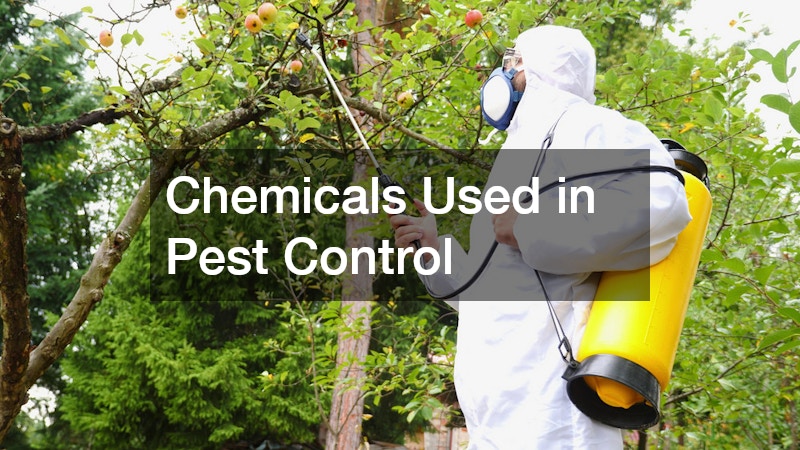
Chemicals play a pivotal role in pest control, offering effective solutions for managing unwanted pests. Understanding the various types and their applications is essential for safe and efficient use. This section serves as a primer, addressing the fundamental questions and considerations necessary for informed decision-making in pest control practices.
What Are the Common Chemicals Used in Pest Control?
Organic Chemicals
Organic chemicals play a significant role in pest control, offering benefits like reduced toxicity to humans and non-target species compared to synthetic alternatives. Examples include pyrethrin from chrysanthemum flowers and neem oil from neem tree seeds. These chemicals are preferred in areas prioritizing safety, such as residential locales and organic farming. They often require more frequent application due to rapid breakdown in the environment. The effectiveness may vary depending on the pest and environmental conditions, necessitating careful management and ongoing research to explore their potential in integrated pest management, reducing reliance on synthetic chemicals,s and promoting eco-friendly solutions.
Synthetic Chemicals
Synthetic chemicals are prevalent due to their effectiveness in diverse scenarios. Engineered for high lethality and economic viability, they include organophosphates, carbamates, and neonicotinoids, offering tailored solutions for specific pest challenges. While cost-effective and reliable, they raise concerns about health, environmental impacts, and pest resistance. Consequently, this encourages integrated pest management techniques and regulatory oversight to ensure safe and balanced pest control paradigms. Technological advancements and education are key to responsible synthetic chemical use, fostering sustainable solutions prioritizing environmental stewardship and long-term productivity.
How Do Pest Control Chemicals Work?
Mechanisms of Action
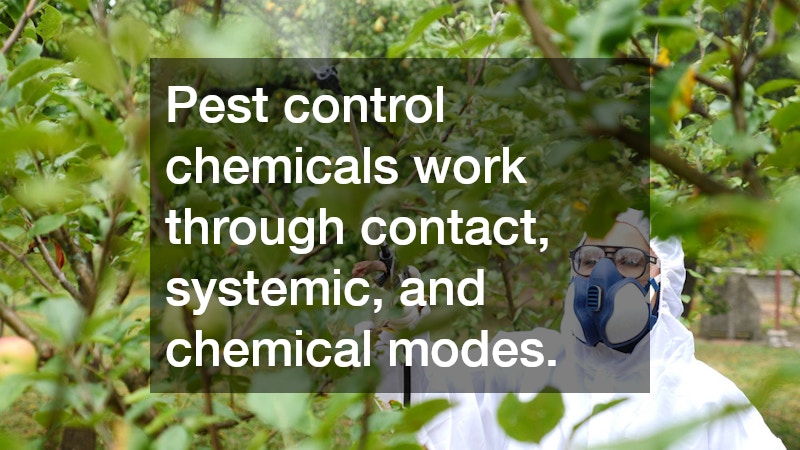
Pest control chemicals work through contact, systemic, and chemical modes. Contact pesticides act directly on the pest surface, while systemic chemicals are absorbed by plants, affecting pests consuming treated foliage. Understanding these mechanisms aids in pesticide selection for specific pest challenges and highlights potential risks to mitigate in non-target organisms and environmental health.
Target Specificity
Target specificity ensures maximum chemical efficacy while minimizing collateral damage. Specific chemicals target biological pathways in pests, reducing impacts on beneficial organisms. For example, Bt targets caterpillar pests without harming beneficial insects. Choosing specific chemicals requires knowledge of pest biology and facilitates effective, environmentally conscious interventions. Advances in RNA interference are explored for species-specific solutions, promoting sustainability.
What Are the Environmental Impacts of Chemical Pest Control?
Impact on Non-Target Species
Pest control chemicals impact non-target species, affecting biodiversity and ecosystem stability. These chemicals may also impact beneficial organisms, reducing ecosystem services like pollination. Strategies like buffer zones and informed application timing help reduce non-target exposure. Monitoring impacts aids adaptive management, fostering sustainable practices that minimize ecological disruptions. Collaboration between stakeholders and data from assessments informs pest control systems supporting biodiversity conservation, underscoring a shift toward balanced human activity and natural ecosystems.
Persistence and Biodegradability
Persistence and biodegradability are critical in evaluating environmental impact. Biodegradable chemicals break down into harmless byproducts, desirable for safety and sustainability. Research optimizes biodegradability, guided by regulatory frameworks encouraging biodegradable options, aligning with global initiatives to reduce pollution. Innovative formulations aim to enhance biodegradability within integrated pest management systems, minimizing reliance on persistent chemicals and driving changes in practices towards healthy ecosystems and sustainable agriculture.
Are There Health Risks Associated with Chemical Pest Control?
Human Health Implications
Health implications warrana t thorough risk assessment due to links between pesticide exposure and health issues. Regulations limit harmful exposure and promote safety protocols to safeguard agricultural workers and consumers. Enhancing public awareness through education and advancing safety standards involves collaborative efforts among health authorities, agricultural sectors, and research institutions.
Safety Measures and Regulations
Regulatory frameworks govern chemical use in pest control, ensuring safety and efficacy. Guidelines control pesticide registration and use, supported by licensing and certification programs for safe management. Continuous monitoring adapts regulations to scientific advancements and emerging risks, ensuring aligned pest control practices.
What Are the Alternatives to Chemical Pest Control?
Biological Control Methods
Biological control methods use natural predators, parasites, and pathogens for pest management, often integrated into broader schemes for minimal ecological disruption. Planning and monitoring ensure the success of biological agents, emphasizing compatibility with other strategies. Challenges include potential ineffectiveness under changing conditions, necessitating ongoing research.
Integrated Pest Management (IPM)
Integrated Pest Management (IPM) combines strategies for sustainable pest management, prioritizing prevention and minimizing impact. It requires stakeholder collaboration and training to implement effectively. Chemicals are a last resort, reducing health and environmental risks. Technological advancements enhance IPM, allowing precision pest control. Public support is crucial, requiring awareness of IPM’s benefits. IPM addresses agricultural and urban challenges, contributing to resilient systems balancing productivity and environmental health, marking a step toward adaptable pest management strategies.
Sustainable pest management practices now prioritize ecological health and safety while maintaining productivity. Collaborative efforts, supported by technology, policy, and education, drive advancements in integrated strategies harmonious with the environment.